NOVA Community
- 3.9
- Rating
- 10.00K
- Installs
- Free
- Price

 Analysis by App-foxy
I approached NOVA Community as a social app for people who want conversations to feel more expressive than a standard text feed. Its identity is tied to the idea of voices and avatars, so the appeal is less about replacing every social network and more about giving online interaction a distinct visual and personal layer. After spending time with it, my view is clear: it is most interesting for users who enjoy experimenting with how they present themselves, while people looking for a mature, busy, utility-first social network may find it less convincing.
That difference matters. A social app can be technically easy to open and still feel difficult to make useful. The real test is whether it helps me find the right people, express myself comfortably, and return without feeling that I am maintaining another empty profile. NOVA Community shows promise as a focused community space, but its relatively small public footprint means the quality of the experience depends heavily on whether the conversations and people I want are already there.
What the app feels like in everyday use
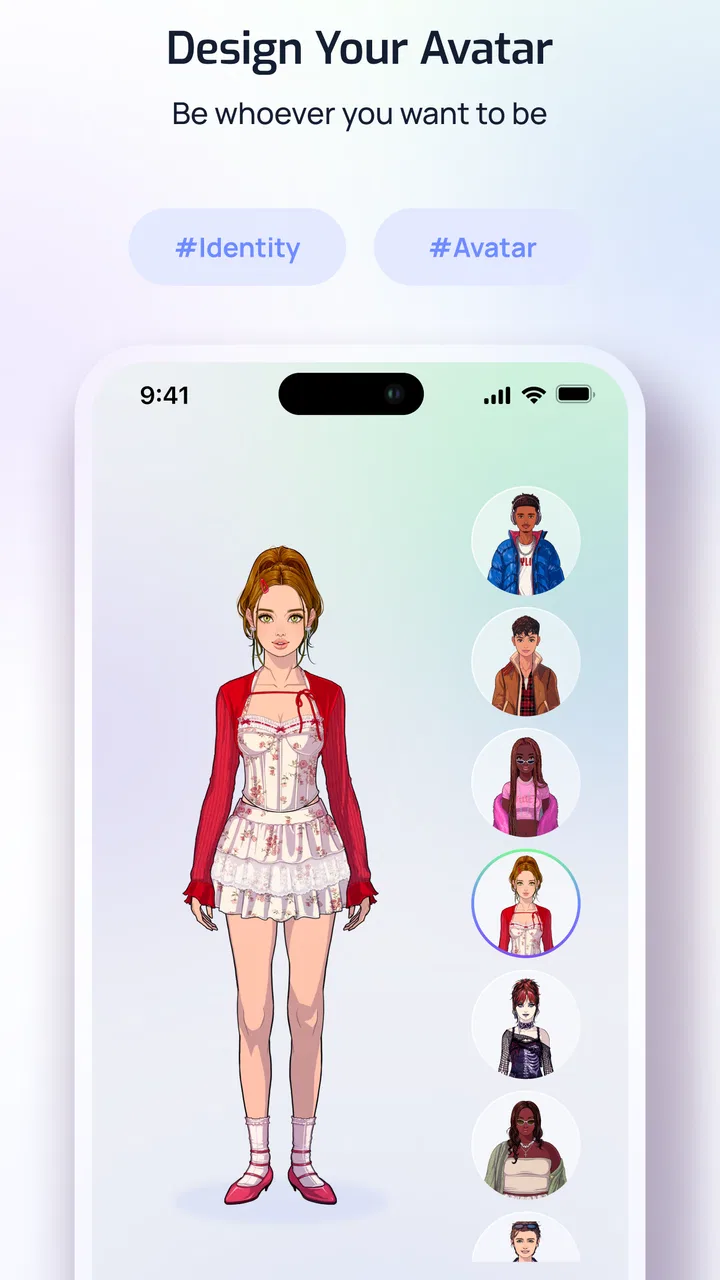
The first thing I noticed is that the app presents itself as a community rather than simply another place to publish updates. That changes how I think about using it. Instead of treating the profile as a polished résumé or a permanent public record, I would use it for lighter interaction: meeting people with similar interests, joining ongoing conversations, and testing a more visual identity through an avatar.
You May Also Like

 AccuWeather: Weather Radar
AccuWeather Review: A Quick, Clear Forecast for Everyday Decisions
For everyday plans, the best forecast is the one you can understand quickly. AccuWeather makes rain timing, radar, and local conditions easy to act on, with a few trade-offs.

 Hill Climb Racing
Why Hill Climb Racing Still Turns Crashes Into One More Run
A tiny car, a bumpy hill and one more upgrade: Hill Climb Racing keeps resurfacing because its simple chaos makes every near-miss feel personal.

 AliExpress - Shopping App
AliExpress Makes Global Shopping Feel Personal, but Shoppers Bear the Risk
AliExpress turns a global marketplace into a pocket-sized discovery engine. Its reach is useful, its shopping loop compelling, and its trade-offs easy to miss.

 Lords Mobile: Kingdom Wars
Lords Mobile Is a Kingdom-Building Routine, Not a Quick Match
A case-by-case verdict on the building, battles, device demands, and social commitments that make Lords Mobile rewarding for some players and exhausting for others.

 PDF Scanner app - TapScanner
TapScanner Makes Paperwork Easier to Capture, Check, and Share
TapScanner makes scanning with a phone feel less like a rescue operation and more like a dependable step in getting work done. Its capture tools are useful, though not flawless.

 Block Blast!
 Shows How Much a Puzzle Game Can Leave Out
A quiet grid game shows why puzzle players increasingly value instant clarity, repeatable skill and low-pressure play—and where the genre still needs to catch up.
More From Our News Desk
View All News


A realistic example would be a quiet evening after work. I might open the app not because I need a specific answer, but because I want to see what other members are discussing and add a short opinion without committing to a long post. In that situation, the avatar-focused approach can make participation feel less formal than using a professional network. It gives the interaction a little personality before I have built a long history with someone.
That same quality can also create uncertainty. On a conventional social platform, I usually understand the basic rhythm immediately: follow accounts, read a feed, react, and send messages. With a newer community-oriented app, I need to learn where the worthwhile conversations happen and what kind of behavior is welcomed. The first sessions therefore require curiosity. I would not judge the app after opening it once and seeing a limited selection of activity.
The strongest reason to try it is the combination of social discovery and avatar-based self-expression. Those two ideas work together. An avatar is not merely decoration when it helps a user feel more comfortable participating. Someone who dislikes posting a real photograph, or who wants a little separation between online identity and everyday identity, may appreciate that extra layer.
Still, I would keep expectations realistic. The app is free to install, but it includes optional purchases priced from $1.99 to $49.99 per item. That makes it important to understand the difference between simply joining the community and spending money on additional elements. I would begin with the free experience, learn whether the conversations suit me, and only then decide whether any paid extras genuinely improve my use.
Why the identity layer matters
Many social applications treat identity as a profile photo, a username, and a short biography. NOVA Community appears to aim for something more imaginative. That can be useful for people who want to participate without presenting themselves in a completely literal way. It may also help users who enjoy changing how they appear depending on the community or mood.
My practical advice is to choose an avatar that makes recognition easy rather than one that is visually complicated. In a small community, familiarity is valuable. If people can quickly recognize me in discussions, I am more likely to build continuity instead of appearing as a different stranger every time I post. That is a small but meaningful social advantage.
I would also avoid treating the avatar as a substitute for a clear profile. Visual style can attract attention, but it does not explain what I want from the community. A short, specific description of my interests would be more useful than a highly elaborate presentation. This is one of the app’s less obvious trade-offs: the creative layer can encourage self-expression, but it can also tempt users to spend more time styling an identity than forming real connections.
Where it compares well with familiar social apps
Compared with a large general-purpose network, NOVA Community feels more focused in concept. The usual alternatives are often crowded with news, advertisements, public personalities, private messages, shopping features, and algorithmic recommendations. That variety can be convenient, but it also makes genuine community interaction harder to notice. A more concentrated app has a chance to feel calmer and more intentional.
Compared with a messaging app, its value is different. Messaging tools are excellent when I already know whom I want to contact. They are not always good at helping me discover new people around a shared interest. NOVA Community is better suited to the earlier stage of that process, where I am looking for a social setting before I have established direct relationships.
Compared with an anonymous discussion board, the avatar approach may feel more personal without requiring the same degree of real-world exposure. That middle ground is appealing. I can express a recognizable identity while keeping some distance. The trade-off is that a community built around identity and avatars may ask more of me socially than a completely anonymous space. I need to participate consistently if I want the app to become meaningful.
Compared with established social platforms, the main disadvantage is momentum. Large services benefit from years of accumulated contacts and content. If most of my friends already use another network, moving to a new community creates friction. I would not recommend abandoning an existing social routine immediately. I would use this app alongside it, especially if I have a specific interest or group of people to explore there.
Who will get the most from it
I think the best audience is people who enjoy community-based interaction but do not want every online conversation tied to a conventional personal profile. Creative users, avatar enthusiasts, people exploring new interest groups, and anyone who prefers a more playful social identity are natural candidates.
It may also suit someone who feels uncomfortable with the pressure of posting polished photographs or constantly proving activity through public updates. The avatar concept can lower that barrier. I would especially consider it for a user who wants to make new connections gradually, beginning with shared conversation rather than immediately exchanging personal details.
On the other hand, I would skip it if my priority were a dependable way to keep in touch with family, colleagues, or an established friend group. A familiar messenger is more practical for that job. I would also choose a larger network if I needed extensive search tools, a deep archive of specialist content, or a guaranteed stream of activity throughout the day.
The age classification is Teen, so younger users and families should approach it as a social environment that still requires sensible boundaries. I would avoid sharing identifying information too quickly, use care when moving conversations outside the app, and remember that an avatar does not automatically make an interaction private or trustworthy. Those habits are useful on any social service, but they are especially important when meeting unfamiliar people.
Small workflows that make the experience better
My first useful workflow would be to spend the opening session observing rather than immediately customizing everything. I would look for the tone of conversations, notice whether members respond thoughtfully, and identify the subjects that produce real interaction. This tells me more about whether the app is a good fit than the visual presentation alone.
My second tip is to treat the profile as a conversation invitation. Instead of writing broad phrases such as “I like everything,” I would mention two or three concrete interests and the kind of interaction I enjoy. That gives other members an easy reason to respond and reduces the awkwardness of starting from nothing.
Third, I would separate discovery from commitment. I would not spend money on optional items during the first visit. I would first determine whether I return naturally, whether I recognize familiar contributors, and whether the community offers conversations I cannot get elsewhere. This is a particularly important trade-off because the purchase range is wide, and a social app only earns that kind of spending when it becomes part of my routine.
A fourth, less obvious approach is to use consistency rather than volume. Posting constantly is not necessary if the community is still taking shape. A thoughtful contribution every so often can make me more recognizable than a burst of low-effort activity followed by silence. In a smaller social space, continuity may matter more than chasing visibility.
Finally, I would evaluate the app by the quality of connections it creates, not by how long it keeps me scrolling. If I leave with one useful conversation or discover a group that genuinely matches my interests, that is a better result than spending an hour passively consuming updates. This mindset helps distinguish a community tool from a conventional entertainment feed.
The limitations I would consider before installing
The public response so far is mixed but not alarming: the app holds a 3.7 average from around twenty ratings. That is enough to show that people have begun forming opinions, but it is not a broad measure of long-term reliability or community depth. I would interpret it as a reason to try the app personally rather than as proof that it will suit everyone.
The listed install reach is over ten thousand, which suggests an early-stage service rather than a dominant social destination. That can be positive because early members may have more influence over the tone and culture. It can also mean fewer active conversations, less variety, and a greater chance that the people I want to meet are not yet participating.
Another limitation is the learning curve created by a concept that is more distinctive than a basic feed. When an app combines community interaction with avatars, I need to understand both the social norms and the identity tools. If the interface does not immediately show me where to begin, I may feel that I am browsing a shell instead of joining a living community. New users should give it more than a few minutes, but the app still has a responsibility to make that first path clear.
The purchase model deserves attention as well. Free access lowers the barrier to trying the service, yet optional items can introduce pressure if the most appealing identity choices appear connected to spending. I would judge paid content by whether it adds genuine expression or merely creates a sense that my free profile is incomplete. That distinction is important for anyone on a budget.
Device compatibility is fairly broad, with support beginning at Android 8.0. The current release is version 1.2.3, so I would keep the app updated and expect the experience to evolve as the developer, ENSAPIA Corporation, responds to early users. An early release can improve quickly, but it may also feel less settled than a long-established social product.
My recommendation for different kinds of users
If I were recommending it to a friend who loves online communities and enjoys building a visual persona, I would say yes, try it without spending money at first. Give the app enough time to reveal its active areas, write a profile that explains what you are looking for, and judge the quality of responses rather than the number of screens or options.
If my friend wanted a private family chat, I would recommend a messenger instead. If they wanted professional networking, I would choose a service designed around work identities. If they wanted a huge entertainment feed with endless content, a major social platform would probably be more satisfying. NOVA Community makes the most sense when the goal is exploratory social interaction with a creative identity layer.
For parents or younger users, I would frame it as a place to practice careful online participation, not as a risk-free environment. Conversations should remain within comfortable boundaries, personal information should be protected, and purchases should be discussed before they happen. The Teen classification is a useful signal that the app is not intended to be treated like a children’s-only space.
For creators, I see a possible advantage in having an identity that is recognizable without being tied entirely to a real-world image. However, I would not install it expecting immediate reach. The current community size points toward experimentation and relationship-building rather than guaranteed exposure. It is better approached as a place to find a niche audience than as a shortcut to becoming widely known.
Final verdict on NOVA Community
My overall impression is that NOVA Community has a clear personality, which is already a strength in a crowded social category. Its focus on voices, avatars, and community gives it a reason to exist beyond copying a standard timeline. I like the possibility of participating with a more flexible identity, and I can see how that would make social discovery feel less formal for the right person.
At the same time, the app is not an automatic replacement for the networks I already use. Its smaller audience may limit the variety and speed of interaction, and the optional purchases mean I would approach customization carefully. The experience will depend less on the concept alone and more on whether the community develops enough activity to keep conversations rewarding.
My recommendation is to try it as a complementary social space, not as your only social app. It is a good fit for curious users who enjoy avatars, gradual connection, and communities with a more imaginative tone. It is a weaker fit for anyone who needs an established network, direct contact with existing friends, or a purely practical communication tool. If the app’s atmosphere matches your interests, its distinctive identity layer may be exactly what makes it worth returning to; if not, a larger and more familiar alternative will likely serve you better.
FAQs for NOVA Community
01What is NOVA Community, and what can I do with it?
NOVA Community is a social platform designed to help users connect, communicate, and participate in an online community. Depending on the available features, you may be able to create a profile, publish or share content, join discussions, discover other members, and interact through comments or messages. The exact experience can vary by region, account type, and app updates, so checking the current store description is recommended before downloading.
02Is NOVA Community free to download and use?
NOVA Community can generally be downloaded without an upfront charge, but some features may depend on account access, optional purchases, subscriptions, or services provided by the community. Before signing up, review the app-store listing and any in-app payment information carefully. Also remember that mobile data usage may create charges from your carrier, especially when browsing media-rich posts or using the app frequently outside Wi-Fi.
03Do I need to create an account to use NOVA Community?
Most community-focused applications require users to create an account before they can participate fully. Registration may involve an email address, phone number, username, or another supported sign-in method. An account can be necessary for posting, messaging, saving content, and managing notifications. Before registering, review the requested permissions and privacy policy so you understand what personal information may be collected and how your profile activity is displayed.
04Is NOVA Community safe for children and private conversations?
The suitability of NOVA Community depends on its content, moderation tools, age requirements, and the people using the platform. Parents should check the official age rating, community guidelines, reporting options, and available privacy controls before allowing a child to use it. Avoid sharing sensitive information publicly, and remember that messages, profiles, screenshots, or shared posts may not remain completely private even when privacy settings are enabled.
05What should I check before downloading NOVA Community on Android or iPhone?
Before installing NOVA Community, verify that your Android or iOS device meets the app’s current operating-system requirements and has enough free storage. Check the developer name, recent reviews, update history, permissions, privacy disclosures, and whether the application is officially available in your country. It is also useful to confirm notification settings, account-recovery options, and whether the app requires continuous internet access for its main features.
Pros
- Simple way to discover and join communities around shared interests.
- Community discussions make it easy to exchange advice and experiences.
- Useful for meeting people beyond your existing social circle.
- The platform can help niche groups stay connected in one place.
- A dedicated community app may feel less distracting than broad social networks.
Cons
- The quality of discussions depends heavily on each community’s activity.
- Smaller communities may have limited posts or slow responses.
- New users may need time to understand the platform’s layout and features.
- Public community interactions can raise privacy and moderation concerns.
- Notifications may become distracting when several communities are active.

NOVA Community
Gallery